Article: Tall, Strong or Sharing Your Reformer? Check These Specs First
Tall, Strong or Sharing Your Reformer? Check These Specs First
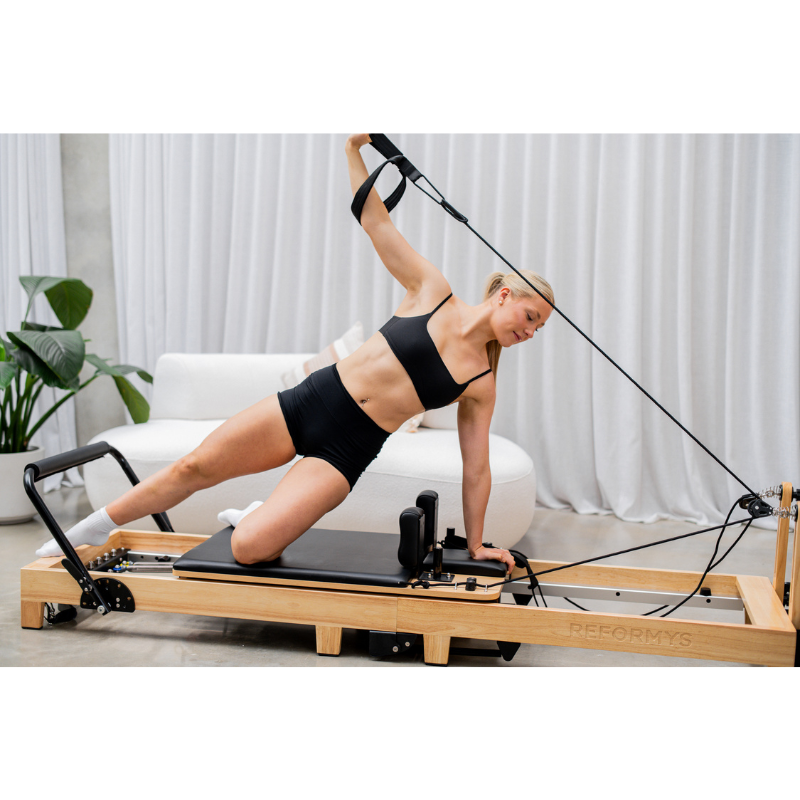
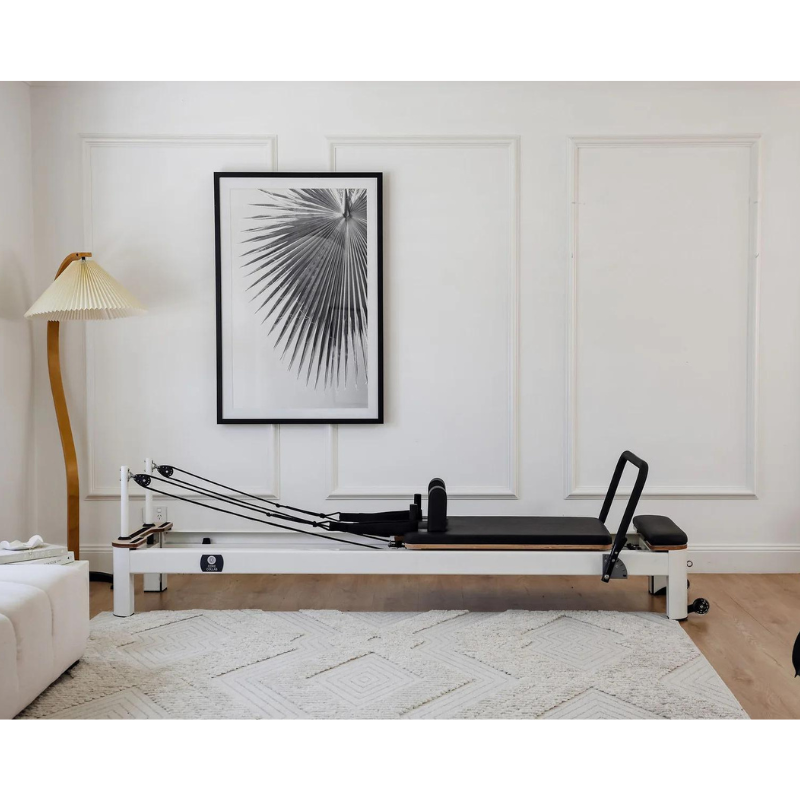
A Pilates reformer machine can look generous in product photos. But it can still feel surprisingly small once you’re actually lying on the carriage.
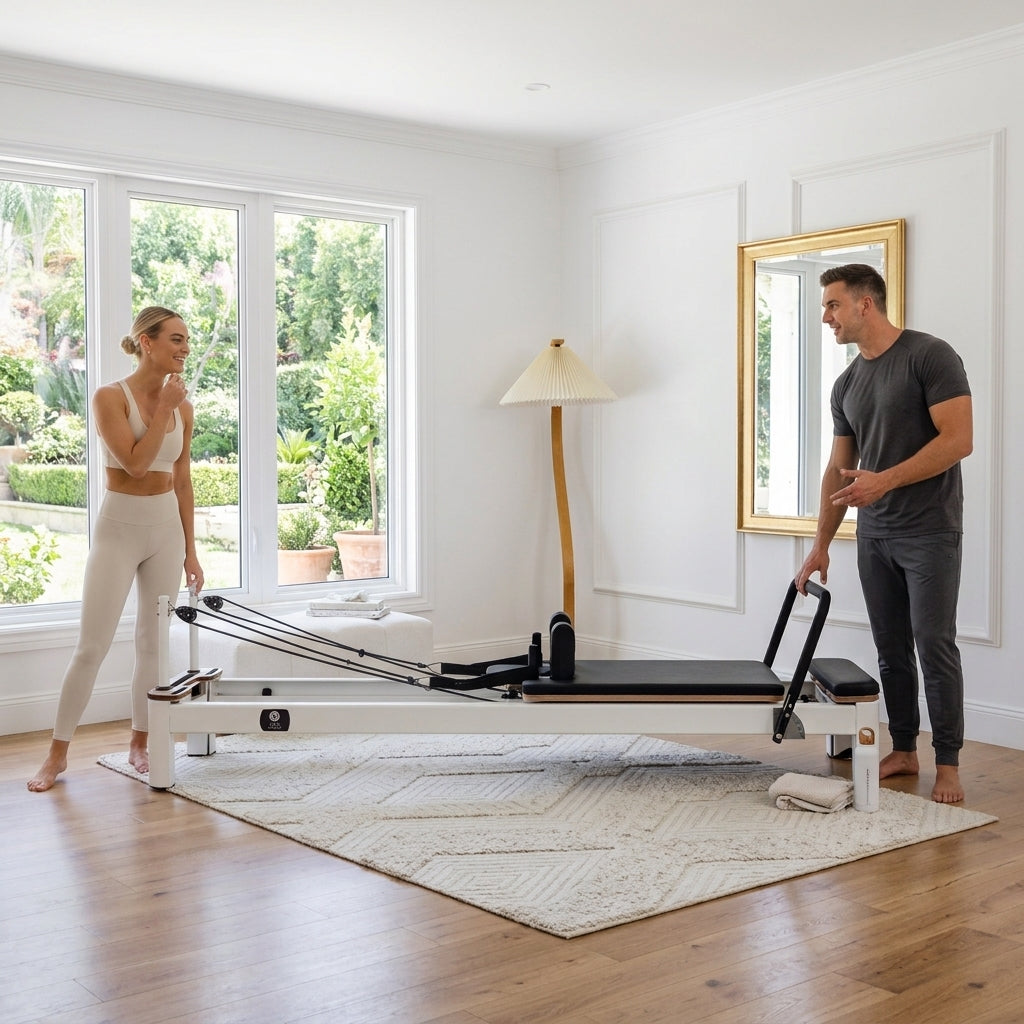
That matters if you’re tall. It matters if you’re a heavier or stronger user. And it really matters when 2 or 3 people with completely different body proportions plan to share the same machine.
The good news is that you don’t need to become an equipment engineer to choose well. You just need to know which specifications deserve more attention than the colour of the reformer.
Frame length, carriage travel, maximum user weight, spring options, adjustability and construction. These can tell you a lot about whether a reformer Pilates machine will suit your household for the long term.
If you’re still comparing the basics, our ultimate guide to buying a Pilates reformer for home is a useful place to start. This guide goes one step further and looks specifically at the specs that become important when you’re tall, strong or sharing.

1. Frame length matters more when you’re tall
When you first compare reformers, overall length is one of the easiest numbers to understand.
A machine measuring 245 cm is obviously longer than one measuring 220 cm.
But overall frame length is only the starting point.
You also need to think about how that space is used. The frame has to accommodate the carriage, springs, footbar, standing platform and other components. So, two reformers with similar frame length can still feel different once you start moving.
For taller buyers, this is why a longer studio-style reformer machine for Pilates can be worth considering.
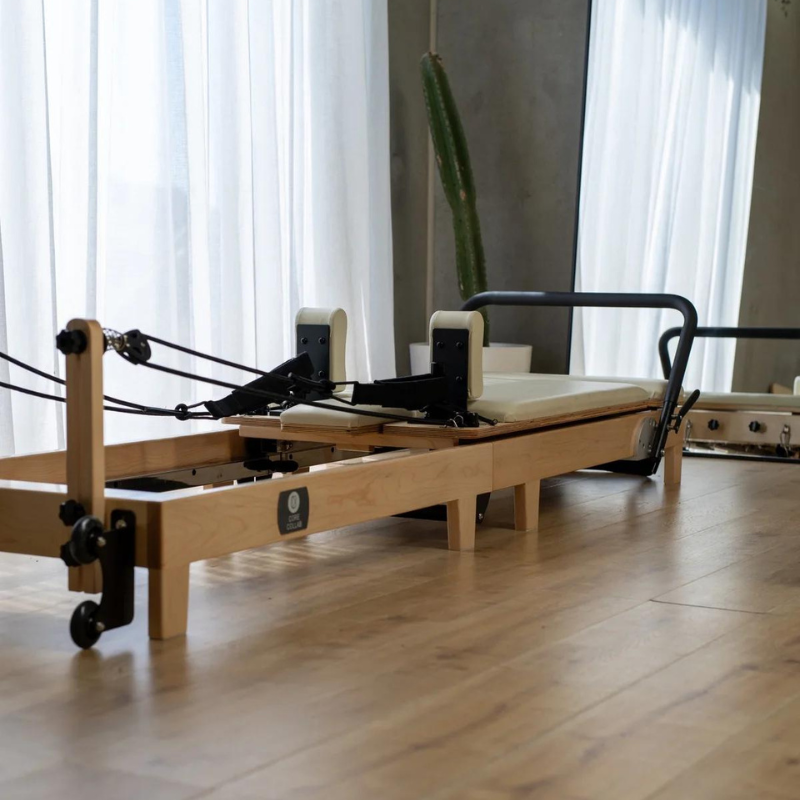
One example within the Elite Reformer range is the Core Collab Full Track Queen Studio Pilates Reformer. It measures 245 cm long and uses a full-length track intended to provide greater movement range and support taller clients.
The point isn’t that every tall person needs a 245 cm machine. Your leg length, torso length and preferred exercises all influence fit.
But if you’re significantly taller than average, a compact reformer shouldn’t automatically win simply because it saves 20 or 30 cm of floor space.
That saving can feel much less exciting once you’re the one trying to exercise on it.
And remember to measure the workout space, not just the machine. Our guide to setting up a Pilates reformer studio at home explains how much space to allow around your machine. You’ll need extra clearance for getting on and off comfortably. You’ll also want enough room for exercises where your arms or legs extend beyond the frame.
2. Don’t confuse carriage size with carriage travel
This is probably the specification most likely to make someone think, “Wait, those are different things?”
They are.
Carriage size describes the padded platform your body rests on.
Carriage travel describes how far that carriage can move along the reformer.
And overall frame length describes the full footprint of the machine.
For a taller user, all three can matter.
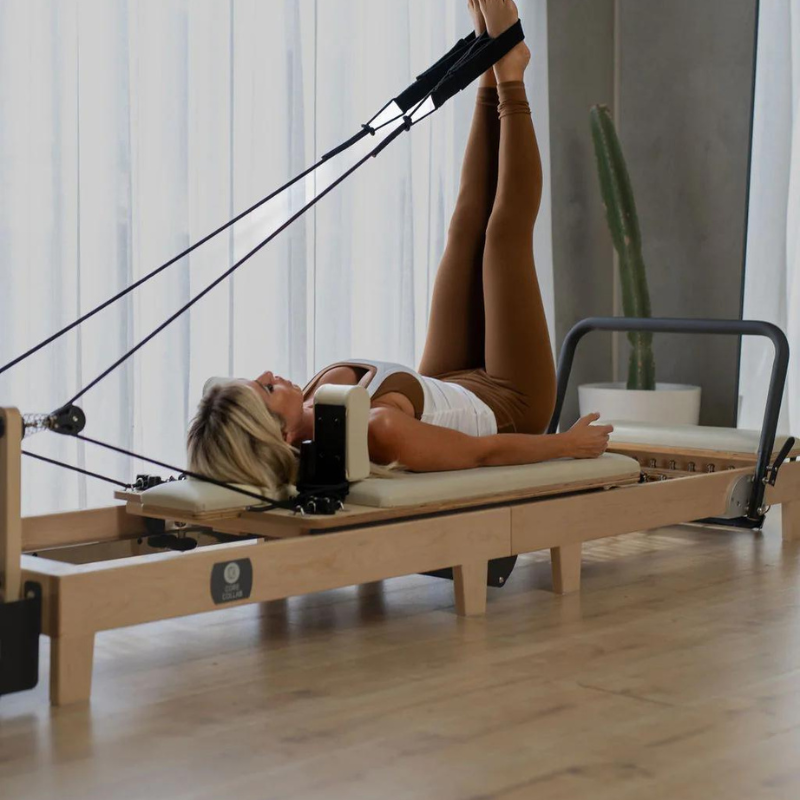
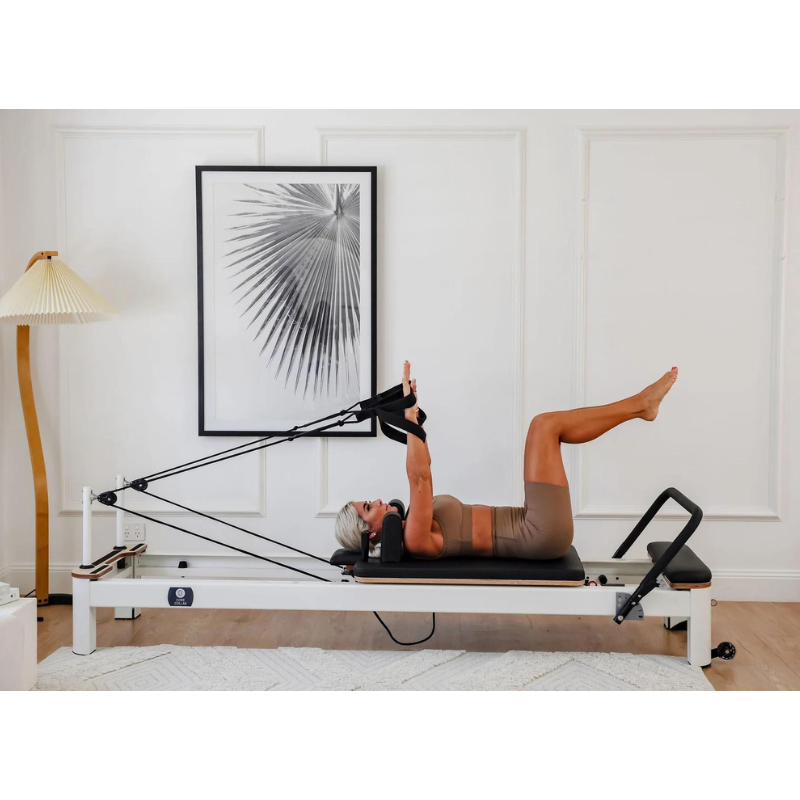
Think about lying on your back with your feet against the footbar. As you straighten your legs, the carriage travels away from the footbar. Longer legs can require more usable movement than shorter legs.
So when comparing a Pilates reformer machine for sale, don’t focus only on the size of the carriage. Check the product page for usable carriage travel too. If available, also look for the recommended user height.
The Milaron Pearl V3 Studio Pilates Reformer, for example, is currently specified by Elite Reformer for users up to 200 cm tall. Its frame measures 244 cm. It also includes adjustable carriage travel, a five-position footbar and a three-position headrest.
That combination is much more informative for a tall buyer than frame length alone.

3. Maximum user weight is a specification, not a suggestion
If you’re buying for a shared household, check the maximum user weight against the heaviest person who will use the machine.
Not the average.
Not the person who plans to use it most often.
The highest individual user weight.
This might sound obvious. But it’s easy to get distracted by storage, accessories and price. A full-sized Pilates machine won’t automatically be suitable for every user.
Capacity is different between reformers.
For example, the Milaron Pearl V3 Studio model is currently rated to a maximum user weight of 155 kg.
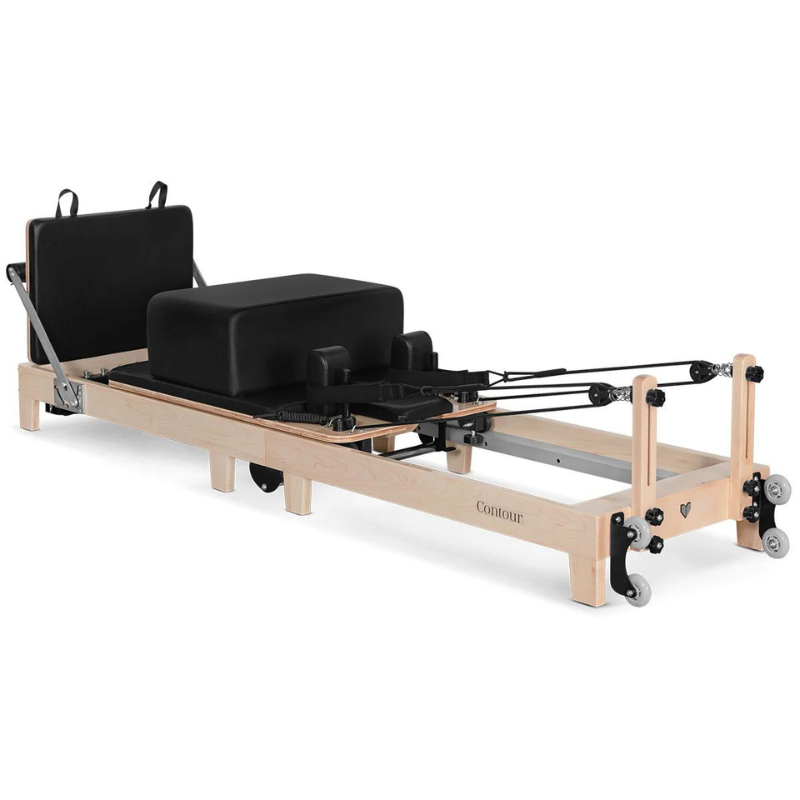
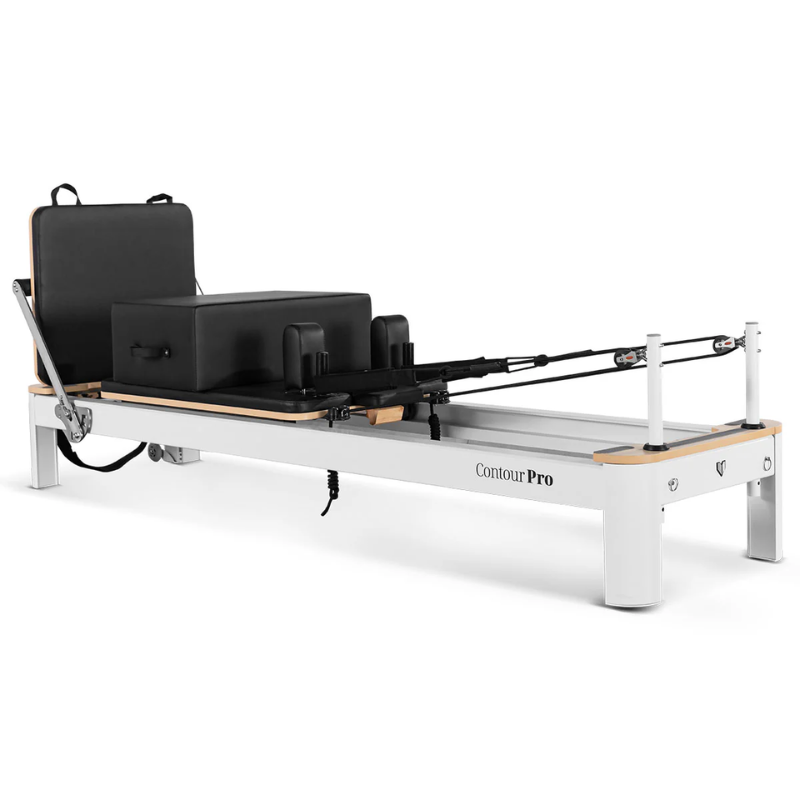
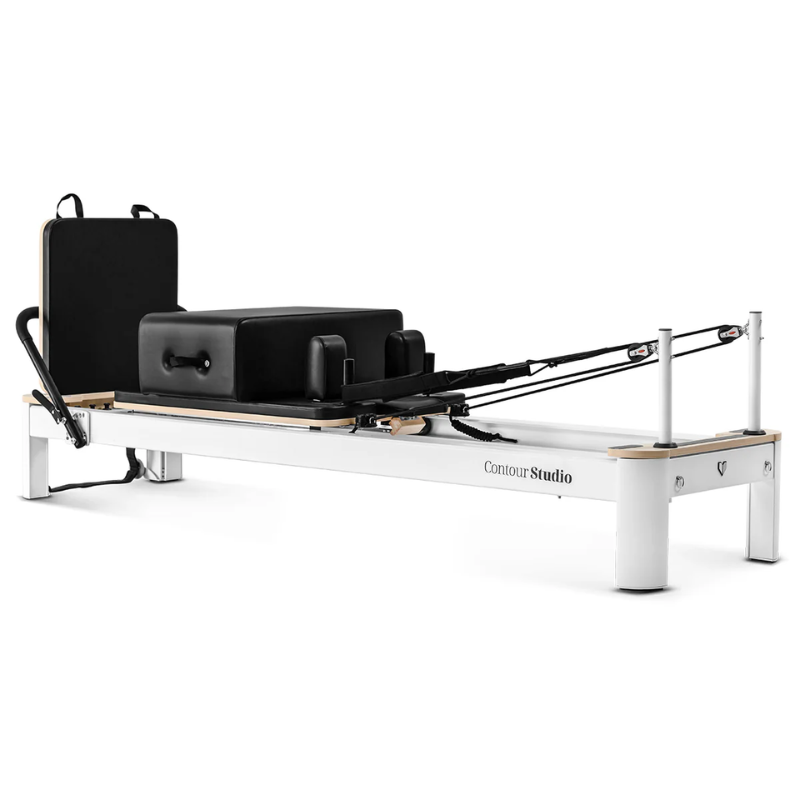
The Lifespan Fitness Contour Studio Commercial Pilates Reformer is rated to 160 kg and measures 244 cm long.
Meanwhile, the Core Collab Full Track Queen Studio reformer is listed with a maximum user weight of 150 kg.
If a household member needs a higher capacity, start there and work backwards.
That one specification can eliminate unsuitable machines very quickly.
4. Stronger users should look at spring range, not just spring count
Springs are at the centre of how a reformer creates resistance.
Equipment-based Pilates uses spring-loaded resistance. On a reformer, the carriage moves back and forth along tracks.
So when you're stronger or sharing with someone who has a very different strength level, it's worth looking closely at the spring setup.
A machine with six springs isn't automatically more versatile than one with five.
What you really want to know is what range of resistance combinations those springs can create.
Are there light, medium and heavy springs? Can you combine them easily? Does the reformer offer more than one spring-platform position? And are replacement springs readily available if you need them later?
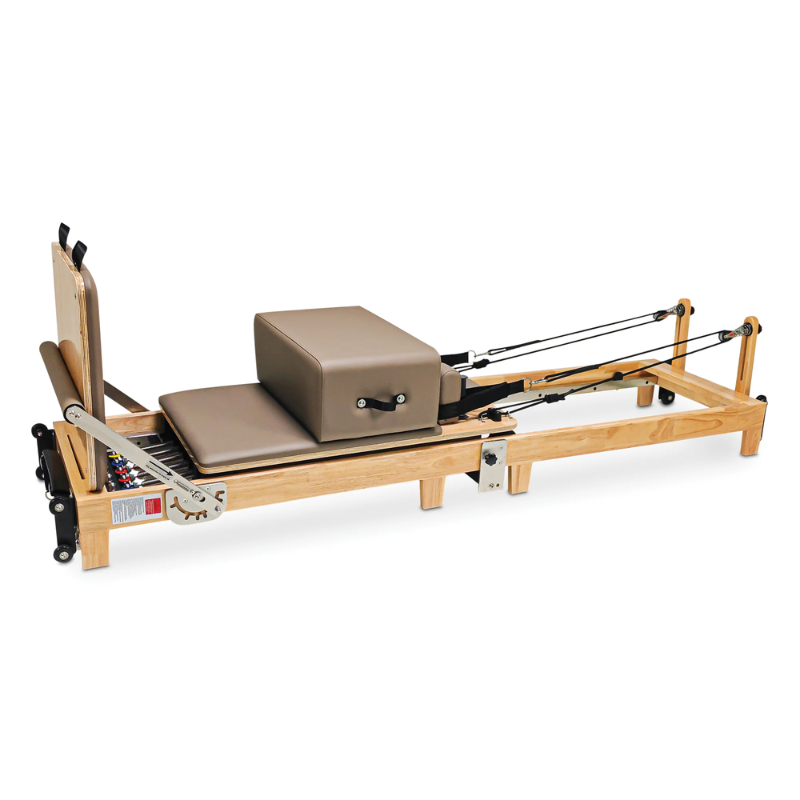
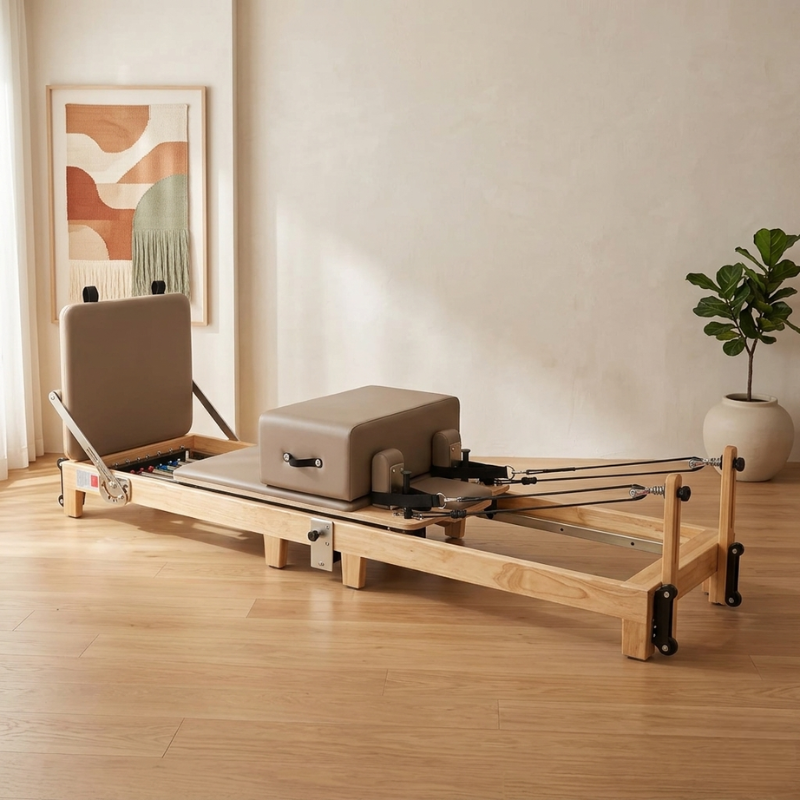
For example, Milaron Maple V3 includes 6 springs. They’re split evenly across heavy, medium and light resistance levels. The reformer also includes a 3-position spring platform.
That flexibility is especially useful in a shared household. One person might be new to reformer Pilates, while another may have years of experience.
And a small but important point: more resistance doesn't always mean a more advanced exercise. Depending on the movement, springs can provide resistance or assistance.
If you’re new to the equipment, start with our guide to reformer Pilates for beginners. It’s a useful read before your first home sessions.

5. Sharing? Adjustability may matter more than almost anything else
This is where a reformer either becomes wonderfully adaptable or mildly annoying every time another person wants to use it.
Harvard Health notes that Pilates can be adapted to suit different needs and abilities. That flexibility can also apply when using a reformer.
Adjustability matters on the equipment side too. It helps you set up the machine for different bodies and exercises.
Pay particular attention to the footbar, headrest, carriage stopper or spring platform, ropes and risers.
If one user has much longer legs, a different footbar or starting-carriage position may help create a more appropriate setup.
If someone has a longer arm span, rope adjustment becomes more noticeable.
If several people use the reformer during the week, adjustments need to be simple. They should be quick and easy enough to change between users.
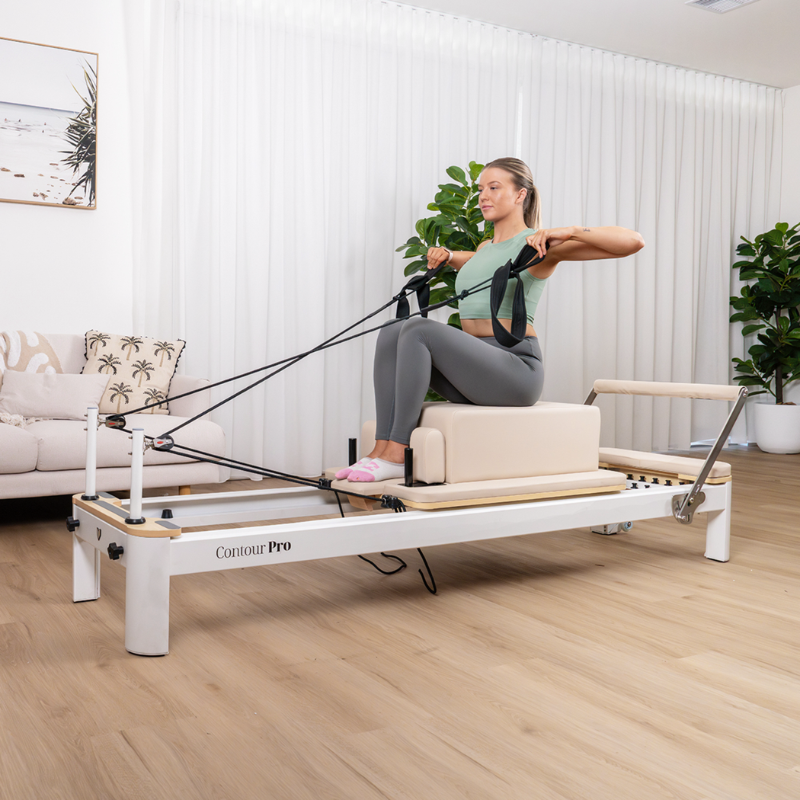
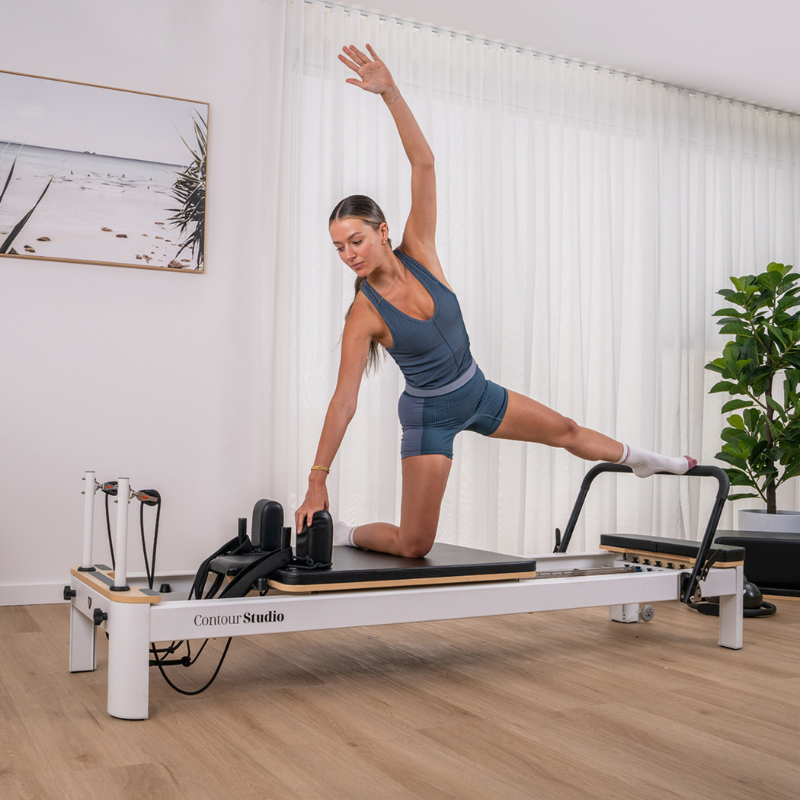
The Contour Studio Commercial reformer is a good example of why this specification is worth opening the product page for. It currently offers 6 footbar positions, 5 stopper positions and three headrest positions.
The Milaron Pearl V3 includes 5 footbar positions and 3 headrest positions. It also has specifications designed with taller users in mind.
Neither setup is inherently “best” for every person.
The useful question is: Does this reformer adjust enough to comfortably accommodate everyone who plans to use it?

6. If several people will use it, think about durability differently
One person completing a few workouts each week puts a very different level of use through a reformer than a couple, family or small studio.
Every extra session adds more wear. That means more carriage movement, spring changes and footbar adjustments. The upholstery and moving parts also get used more often.
So if you're planning frequent shared use, construction deserves more attention.
Check the frame material, carriage wheels, padding, upholstery and springs. Look at the adjustment mechanisms and warranty too. It’s also worth confirming whether the reformer is designed for regular studio or commercial use.
The Contour Studio Commercial reformer uses an aluminium frame designed for commercial use. It also features high-carbon-steel springs. Elite Reformer currently lists the machine at 75 kg, with a 160 kg maximum user capacity.
The Core Collab Full Track Queen is designed for high-volume studio use. It features a reinforced track system and a full-length frame.
This doesn't mean a commercial-grade reformer machine for sale is automatically the right choice for every home.
If you're the only user and storage is your biggest priority, it might be more machine than you need.
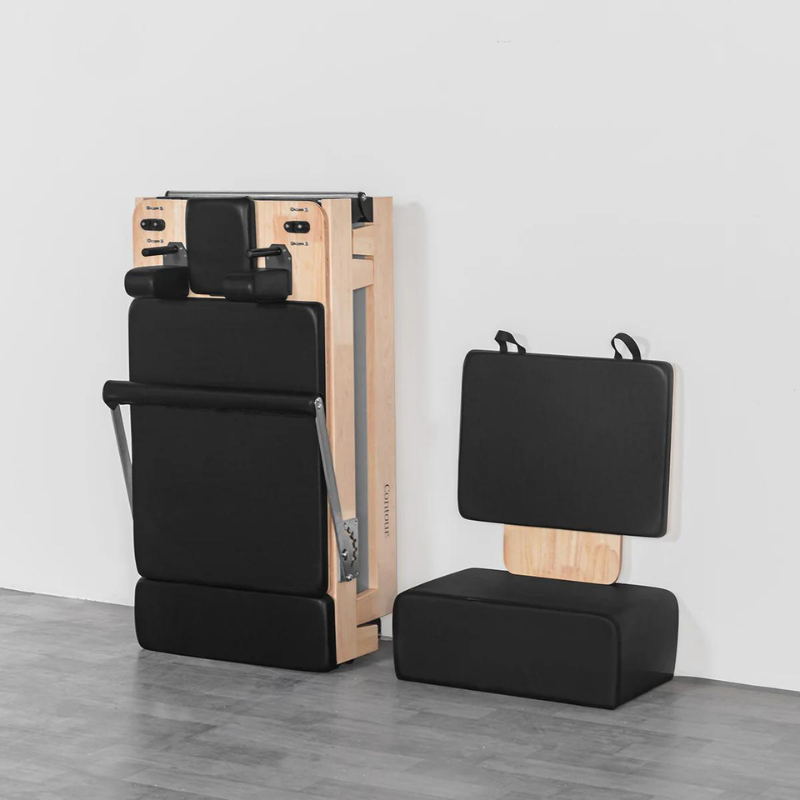
Our comparison of the best wooden foldable Pilates reformers for home is useful if compact storage is higher on your list.
If three different people will use the reformer each week, it’s worth comparing studio and commercial models. You don’t need to limit your search to lightweight home options.

Tall user? Check these specs in this order
If you're tall, I would start with recommended user height where the manufacturer provides it.
Next, check the carriage travel or full-track design. Then look at the overall frame length, footbar adjustability and rope adjustment.
That gives you a much more useful picture than simply looking for the longest product dimension on the page.
Someone approaching 2 metres tall may genuinely need a longer studio reformer. That’s very different from choosing a longer model purely for its appearance.
The Milaron Pearl V3's stated suitability for users up to 200 cm makes that information particularly easy to assess.
The Core Collab Full Track Queen is another option worth comparing. Its full-track design may suit taller users who need more movement range.
Heavier user? Start with capacity before anything else
For heavier users, maximum user weight should be one of your first filters.
Once the machine meets that requirement, check the frame construction and overall stability. Then look at the adjustment options and spring setup.
This is where higher-capacity studio and commercial-grade reformers can become especially appealing.
The Contour Studio Commercial has a 160 kg user weight rating. The Milaron Pearl V3 is rated to 155 kg. Both are higher-capacity options available through Elite Reformer.
Don't assume that “commercial” automatically means a particular capacity, though. Always check the individual product specifications before buying.
Strong user? Think beyond “more resistance”
If strength training is already part of your week, you might look for a reformer with more or stronger springs. That can seem like the obvious choice at first.
I'd look a little deeper.
What matters is having enough spring combinations to suit different movements. Each combination can change how an exercise feels. You’ll likely use different settings for footwork and arm exercises. Some movements may also use spring tension for assistance.
If you use both training styles, our guide to Pilates reformer machines vs weight training is worth a read. It explores how reformer sessions and weights can work together in the same routine.
Sharing with someone? Buy for the biggest difference between you
This is probably the easiest rule to remember.
If you are 165 cm tall and your partner is 195 cm, shop with the taller person's space requirements in mind.
If one person needs a higher maximum user weight, shop to that capacity.
If one person is stronger or more experienced, check the spring options carefully. Make sure there’s enough flexibility to suit their training.
Then confirm that the machine can adjust comfortably back down for the other user.
A slightly larger reformer machine for Pilates will take up more room. But that extra space may be worth it if the machine suits both users.

Pilates reformer machine specs: Your quick buying checklist
|
Check |
What you’re really asking |
|
Frame length |
Is the machine physically long enough for the intended users and the room? |
|
Carriage size |
Is there enough supportive space for the user’s body? |
|
Carriage travel or full-track design |
Is there enough usable movement for longer legs and different exercises? |
|
Maximum user weight |
Is every person who will use it comfortably within the stated limit? |
|
Recommended user height |
Does the manufacturer specifically confirm suitability for taller users? |
|
Spring range |
Are there useful light, medium and heavy resistance combinations? |
|
Footbar adjustment |
Can different users change the setup for their proportions? |
|
Headrest and carriage adjustment |
Can you personalise the starting position and support? |
|
Rope adjustment |
Can users of different heights and arm spans set up appropriately? |
|
Frame and carriage construction |
Does the build suit the amount of use it will receive? |
|
Warranty and replacement parts |
Can you maintain the machine properly over the years? |
So, which Pilates reformer machine should you buy?

If you’ve been searching for a Pilates reformer machine Australia wide, the options can start to blur together. Bring the decision back to the people who will actually use it.
For taller users, prioritise usable length, carriage travel and adjustability.
For heavier users, start with maximum user capacity.
For stronger users, compare spring range rather than spring count alone.
For shared households, start with the person who has the greatest fit requirements. Then make sure the reformer can adjust easily for everyone else.
That might lead you towards a longer studio Pilates reformer rather than a compact home machine. If capacity and frequent use are important, consider Elite Reformer's commercial Pilates equipment range. It may be a better fit for higher-use households.
There is no single Pilates reformer machine for sale that is perfect for every body and every home.
You’re more likely to find the right reformer when you look beyond appearance. Focus on the specifications that impact how the machine actually feels to use.
Ready to buy a Pilates reformer machine? Explore Elite Reformer's full range of Pilates reformer machines. Compare the frame size and user capacity first. Then look at the spring setup and adjustment options before making your choice.

Written by Elite Reformer